


Newcastle thermal coal prices strengthen on coal-exit protest
- Policy
- Price
- Ports
- Coal
sxcoal.com406 words42 reads


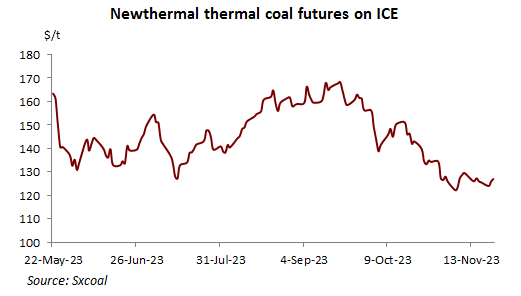
Newcastle thermal coal prices continued to rise, nearing the psychological level of $130/t, driven by supply concerns as protest calling for coal exit is set to blockade the world's largest coal port.
On November 23, the December contract on the ICE closed at $128/t, up 0.79% from a day earlier. This marked the third consecutive day of gains.
Climate change protesters prepared to disrupt operations at Newcastle port in a bid to pressure the government to take stronger action against fossil fuels.
The group Rising Tide plans to blockade the shipping channel with small boats for 30 hours (including overnight) as part of its "People's Blockade" protest running from November 24 to 27. The Port of Newcastle said it is ready to halt all vessel movements if the demonstration poses a safety risk.
This could impact exports of thermal coal, agricultural commodities like wheat, and metals including aluminum from the nearby Tomago smelter. The port also handles imports of fuel, fertilizer and other materials.
Rising Tide is calling on Canberra to stop approving new coal projects immediately and impose a 75% tax on fossil fuel export profits to fund community and industrial transition, and pay for climate loss and damage. It wants thermal coal exports banned from Newcastle by 2030.
Newcastle is Australia's largest coal export terminal, with shipments rebounding in October after flooding disrupted output in 2022.
Since the start of this year, as China's demand – especially for high-CV thermal coal – expanded, Newcastle's coal exports have increased compared with a year earlier. In January-October, the port's coal exports increased 16.47% on the year to 132 million tonnes. The exports have been on the rise since August, reaching 12.96 million tonnes in October, up nearly 30% year on year.
Last year, coal exports from Newcastle port totaled 136 million tonnes, falling 13.02% year on year on persistent rains affecting coal production and port loading, the port data showed.
The weather forecast on November 25 included a chance of thunderstorms and strong winds, according to the Bureau of Meteorology, which could influence the blockade plans.
Around 90% of coal exports via Newcastle port are thermal coal.
Kpler data showed in the week to end on November 26, Newcastle port's coal exports are expected to fall to 1.98 million tonnes, down from 3.32 million tonnes a week earlier, and then to bounce back to 3.04 and 6.38 million tonnes in the next two weeks.


 No Content

